
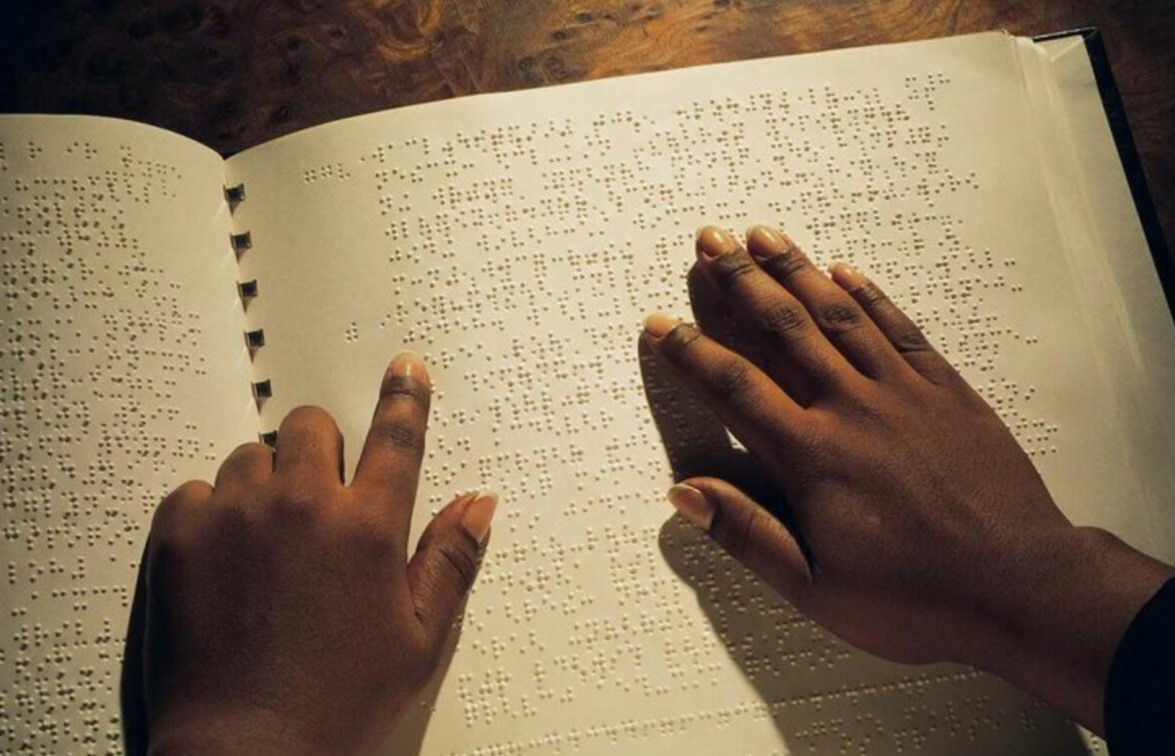
On 4th January, AfriCestral Sauti joins the global community in commemorating World Braille Day – a moment to recognize the transformative power of Braille and to reaffirm our shared responsibility to build inclusive, accessible societies. In 2025, the focus on “Celebrating Accessibility and Inclusion for the Visually Impaired” speaks directly to our mission of amplifying African voices and ensuring no one is left unheard or unseen.
At AfriCestral Sauti, we recognize that Braille is far more than a system of raised dots – it is a powerful gateway to literacy, knowledge, cultural expression, and self-reliance for visually impaired persons. Through Braille, individuals with visual impairment can read, write, learn, work, and engage with society confidently and independently for literacy is the foundation of empowerment. For many visually impaired people, Braille is the key that unlocks education, opportunity, and dignity.
This day calls on all of us to build a society where no one is excluded because of vision impairment through promoting inclusion by ensuring equal access to education, employment, public services, and creative spaces. From Braille learning materials in schools to Braille signage in public spaces, transport systems, banks and workplaces accessibility must be intentional, universal, and sustained for accessibility is a fundamental human right and a prerequisite for true inclusion.
As the world becomes increasingly digital, the integration of artificial intelligence (AI) and Braille is no longer optional – it is essential. While digital transformation has expanded access to information for many, it has also risked leaving visually impaired people behind where accessibility is not intentionally designed. Integrating AI with Braille ensures that technological progress is inclusive, equitable, and empowering.
AI has the potential to revolutionize how Braille is produced, taught, and accessed. Through AI-powered Braille translation tools, text can be converted instantly into Braille, making books, documents, and online content more readily available. This significantly reduces the cost and time involved in producing Braille materials, especially in contexts where resources are limited. For learners in rural and underserved communities, this means faster access to educational content in formats they can use independently.
AI-enabled refreshable Braille displays and smart assistive devices further enhance real-time access to information. When integrated with screen readers, voice recognition, and natural language processing, these technologies allow visually impaired users to navigate digital platforms, access educational materials, engage with social media, and participate in the digital economy with greater autonomy. This convergence of AI and Braille supports not only literacy but also digital skills development – an increasingly critical requirement for employment, lifelong learning and creative expression for visually impaired people.
To make this integration a reality, intentional collaboration and investment are required. Governments must prioritize inclusive digital policies and fund accessible technologies. The private sector and innovators should embed accessibility into product design from the outset, not as an afterthought. Educational institutions and civil society organizations must advocate for and adopt AI-driven Braille solutions, while ensuring affordability and local relevance.
Equally important is the involvement of visually impaired people themselves in the design and deployment of these technologies. Their lived experiences are critical to ensuring solutions are practical, culturally responsive, and truly empowering.
By integrating AI and Braille, we can bridge information gaps, promote digital literacy, and unlock new pathways to education, employment, and creative expression. This integration moves us closer to a future where visually impaired people are not merely included in the digital world but are active creators, innovators, and leaders within it.
On this day, we also honors the legacy of Louis Braille, whose invention revolutionized access to information nearly two centuries ago. Yet today, many visually impaired individuals – particularly in developing contexts – still face limited access to Braille materials, assistive technologies, and inclusive learning environments.
This day reminds us that: access to information is a human right, Braille remains essential in an increasingly digital world, inclusive design strengthens communities and benefits everyone.
As we commemorate the World Braille Day 2025, governments, cultural institutions, educators, innovators, and communities should move beyond awareness to action by:
- Investing in Braille education and learning resources
- Promoting accessible public, cultural, and digital spaces
- Supporting innovation that enhances Braille literacy and access
- Championing policies that protect and advance the rights of persons with visual impairments
Celebrating accessibility and inclusion means creating a world where every voice matters – where everyone can read, learn, create, and thrive with independence, dignity, and pride.